HSP Test: Coping Strategies for Sensory Overload
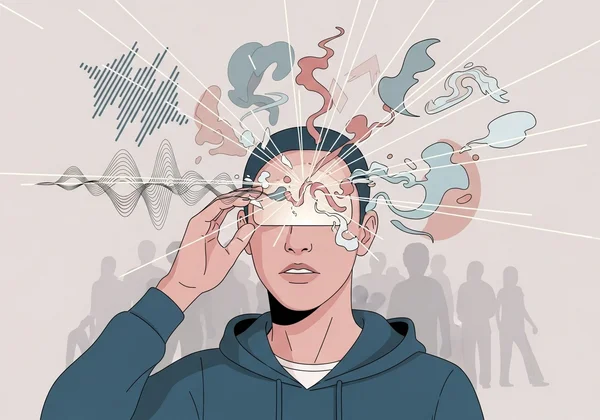
For highly sensitive people (HSPs), the world often feels too loud, bright, or simply too much. If you feel drained by everyday environments and wonder, "am i a highly sensitive person?", you're not alone. This feeling of being overwhelmed is known as sensory overload, a core aspect of the HSP trait. The good news is that you can learn to manage it. This guide offers practical strategies to handle sensory overload and thrive. Your journey to self-understanding can begin today with an official hsp test.
Understanding Sensory Overload: Why HSPs Feel More
To cope with sensory overload, it's crucial to understand its cause. High sensitivity isn't a flaw; it's a biological trait defined by a more responsive nervous system. You process stimuli more deeply than others, a strength that can also lead to easier overstimulation. Taking a comprehensive hsp test is the first step toward confirming this trait and understanding how it shapes your experience.
The Science Behind Your Sensitivity: How the DOES Model Explains Overwhelm
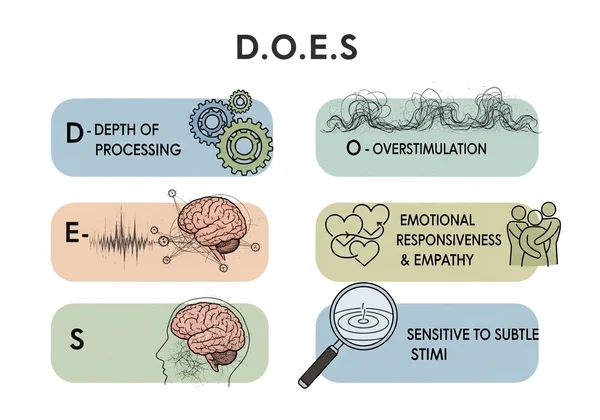
Dr. Elaine Aron, the pioneering researcher in this field, developed the acronym D.O.E.S. to describe the four key aspects of high sensitivity. Understanding this framework illuminates why sensory overload occurs.
-
D - Depth of Processing: HSPs process information more thoroughly, thinking deeply and making connections others miss. This intense reflection requires significant mental energy, making you susceptible to cognitive fatigue when bombarded with stimuli.
-
O - Overstimulation: Your finely tuned nervous system notices more environmental details. What is background noise to others can be a cacophony to you. This heightened awareness means you reach your stimulation threshold faster, leading to feelings of being frazzled and overwhelmed.
-
E - Emotional Responsiveness & Empathy: You feel emotions, both positive and negative, more intensely and have a high level of empathy, often absorbing the feelings of those around you. This emotional depth can be exhausting in socially charged situations.
-
S - Sensitive to Subtle Stimuli: You are highly aware of subtle environmental details, like a faint scent, a minor change in lighting, or a shift in someone's tone of voice. While this makes you intuitive, it means your brain is constantly processing vast amounts of data that others filter out.
Identifying Your Unique Sensory Triggers and Early Warning Signs
Managing sensory overload begins with self-awareness. Your triggers are unique, though many HSPs share common ones like loud noises, bright lights, strong smells, crowded spaces, and intense conversations. Pay close attention to your body’s early warning signs—the signals that you’re approaching your limit. Physically, this could be a racing heart, muscle tension, or fatigue. Emotionally, you might feel irritable, anxious, or unable to concentrate. Recognizing these signs allows you to intervene before becoming completely overwhelmed. If this sounds familiar, you can start your discovery and gain clarity.
Proactive HSP Coping Strategies for Daily Well-being
Once you understand your triggers and warning signs, you can shift from reacting to overwhelm to proactively managing your energy and environment. These strategies are designed to protect your sensitive system and foster a sense of balance.
Building Your Personal 'Sensory Shield': Tools and Techniques
Think of these tools as a "first-aid kit" for your senses. Having them readily available can make a world of difference when you find yourself in an overstimulating environment.
-
Noise-Canceling Headphones: A true game-changer for many HSPs. Use them in open-plan offices, on public transport, or during errands to block out overwhelming auditory input.
-
Sunglasses or Tinted Lenses: Bright or fluorescent lighting is a common trigger. Wearing sunglasses outdoors and considering blue-light-blocking glasses indoors can reduce visual strain.
-
Comfortable Clothing: Scratchy tags, tight waistbands, or restrictive fabrics can be a constant source of low-level irritation. Opt for soft, natural, and breathable materials.
-
Mindful Breathing: When you feel overwhelm creeping in, focus on your breath. A simple technique is the 4-7-8 method: inhale for 4 seconds, hold for 7, and exhale slowly for 8. This activates the parasympathetic nervous system, promoting a state of calm.

The Power of Proactive Planning and Intentional Retreats
Prevention is often the most effective strategy. By planning ahead, you can minimize exposure to triggers and ensure you have enough downtime to recover.
- Schedule Downtime: Treat quiet time as a non-negotiable appointment in your calendar. HSPs need more time alone than others to decompress and process. This isn't selfish; it's essential for your well-being.
- Create a Sanctuary Space: Designate a corner of your home as your personal retreat. Fill it with things that soothe you—a comfortable chair, soft lighting, calming scents, and your favorite books or music. This is your safe space to recharge.
- Plan Your Outings: If you know you're heading into a potentially overwhelming situation, plan for it. Go grocery shopping during off-peak hours. At a social gathering, identify a quiet spot where you can take a break if needed.
Thriving in Specific Overstimulating Environments
General strategies are helpful, but applying them to specific, challenging situations is key to living well as an HSP. To best apply these, first understand your traits with a detailed test.
Navigating the Workplace: Strategies for the Highly Sensitive Professional
The modern workplace can be a minefield of sensory triggers. To manage hsp at work, try personalizing your space as much as possible. Use a desk lamp instead of harsh overhead lighting, bring in a small plant, and use headphones to create a focus zone. Take short, regular breaks away from your desk—a brief walk outside can do wonders. Importantly, learn to communicate your needs clearly and calmly, such as asking to move a loud conversation to a meeting room.
Mastering Social Situations: Overcoming Highly Sensitive Person Social Anxiety
Social events can be draining due to the combination of noise, conversation, and emotional energy. While some HSPs experience social anxiety, the trait itself is different. To cope, try having a "buffer." Arrive a bit early to acclimate before it gets crowded, or bring a friend you feel comfortable with. Focus on having one or two meaningful conversations rather than trying to mingle with everyone. It's also perfectly acceptable to set a time limit for yourself and leave when you feel your energy waning.
Finding Calm in Crowded Public Spaces and Errands
Public spaces are often chaotic. To manage them, be intentional. Create a specific list before you go shopping to minimize aimless wandering. Listen to a calming podcast or playlist through your headphones to create a personal audio bubble. Practice mindfulness by focusing on a single sensation, like the feeling of your feet on the ground, to anchor yourself in the present moment and tune out the surrounding chaos.
Embrace Your Sensitivity: Your Path to a Thriving Life
Being a highly sensitive person in a world not always designed for you presents unique challenges, but sensory overload doesn't have to rule your life. By understanding the science behind your trait, identifying your personal triggers, and proactively implementing coping strategies, you can transform your sensitivity from a source of stress into a powerful asset. Your depth of processing, empathy, and awareness are incredible gifts.
The first step to mastering your environment is understanding your unique trait. Acknowledging your sensitivity is an act of empowerment. Take the free, official HSP personality test on our site to gain profound insights into how your mind works and unlock a path toward a more balanced, fulfilling, and thriving life.

Disclaimer: This article is for informational purposes only and does not constitute professional psychological or medical advice. If you have concerns about your mental health, please consult a qualified professional.
Frequently Asked Questions About High Sensitivity & Coping
What does HSP look like in adults?
In adults, high sensitivity often manifests as deep thinking, strong emotional reactions, and a rich inner life. They may be deeply moved by art or music, feel a strong sense of empathy, and notice subtle details others miss. They also tend to need more downtime to recover from stimulation and may feel overwhelmed by busy schedules or chaotic environments.
Do highly sensitive people need more sleep?
Yes, many HSPs find they need more sleep than the average person. Because their brains are constantly processing information so deeply, they are more prone to mental and physical fatigue. Quality sleep is crucial for the HSP nervous system to rest, repair, and process the day's events.
What not to do to a highly sensitive person?
Avoid rushing them to make decisions, as they need time for deep processing. Don't dismiss their feelings as "overreacting," as their emotional responses are genuine. It's also unhelpful to put them in overly chaotic or high-pressure environments without a break, and try to avoid harsh criticism, as they are very sensitive to it.
How do you confirm if you are an HSP?
While self-reflection on the core traits (Depth of processing, Overstimulation, Emotional responsiveness, and Sensitivity to subtleties) is a great start, the most reliable way to begin is by taking a scientifically-grounded assessment designed by experts. You can take the free test on our website to see how you score on the official HSP scale and get a clear picture of your unique trait.