Official HSP Test: What NOT to Say or Do to Highly Sensitive People (HSP Guide)
Do you ever feel deeply misunderstood, or wonder why certain comments and situations affect you more intensely than they seem to affect others? Perhaps you live with, love, or work with someone who experiences the world with a profound richness but also feels easily overwhelmed. You're not alone, and there's a reason for these feelings. Understanding the trait of the highly sensitive person (HSP) is the first step toward building stronger, more empathetic connections. What are the signs of a highly sensitive person? Let's explore the common pitfalls in communicating with HSPs and find actionable ways to foster the understanding you crave.
Whether you're exploring your own nature or seeking to support someone you care about, this guide will help you create an environment of empathy and validation. We can build genuine connections by moving beyond misunderstanding. A great place to start this journey is by discovering where you or a loved one falls on the sensitivity spectrum with a free HSP test.
Understanding Highly Sensitive People: The Foundation of Better Communication
Before we dive into what to avoid, it's crucial to understand what being highly sensitive truly means. It’s not a choice, a flaw, or a disorder; it's a neutral, innate personality trait rooted in biology. Formally known as Sensory Processing Sensitivity (SPS), this trait is present in about 15-20% of the population. It means an individual's nervous system is wired to process physical, emotional, and social information more deeply than others.
This deeper processing is the cornerstone of the HSP experience. It’s the source of their greatest strengths—like empathy, creativity, and intuition—but it also makes them more susceptible to feeling overwhelmed by their environment.

What Does it Mean to Be an HSP? (Brief Overview)
Being a highly sensitive person means you experience the world with a heightened level of awareness. Psychologist and pioneering researcher Dr. Elaine N. Aron identified this trait, noting that HSPs are more attuned to subtleties in their surroundings. This can include everything from the faint scent of perfume in a room to the slight shift in a friend's tone of voice.
This isn't about being weak or "overly emotional." It's about having a nervous system that is a finely tuned instrument. While this instrument can create beautiful music through deep connections and artistic expression, it can also be easily knocked out of tune by excessive noise or harshness.
The Impact of Depth of Processing and Overstimulation
Two core aspects define the daily life of an HSP: depth of processing and a tendency toward overstimulation. Depth of processing means that HSPs subconsciously analyze information more thoroughly. They connect incoming data with past experiences, consider multiple outcomes, and reflect deeply before acting. This is why they often give thoughtful advice and notice things others miss.
However, this constant, deep processing consumes significant mental energy. When you combine that with a nervous system that takes in more sensory data—louder sounds, brighter lights, stronger emotions—it’s easy to see how overstimulation occurs. An HSP can reach a point of "burnout" far more quickly in situations that non-HSPs find manageable, like a crowded party or a busy open-plan office. Recognizing this is key to understanding their need for downtime and a calm environment.

What Not to Do to an HSP: 5 Common Mistakes & Their Impact
Interacting with a highly sensitive person requires a degree of mindfulness. Certain common phrases and actions, often said without ill intent, can be deeply invalidating and draining for an HSP. Here are five key things to avoid.
Dismissing Their Feelings: "You're Too Sensitive" or "Just Get Over It"
This is perhaps the most damaging phrase you can say to an HSP. It dismisses their fundamental neurobiology and implies their feelings are a choice or a flaw. For an HSP, their sensitivity is their reality. Telling them to "get over it" is like telling a tall person to be shorter—it's invalidating and impossible.
Instead of dismissing, try validating. Phrases like, "I can see that really affected you," or "That sounds like it was a lot to handle," show that you respect their experience, even if you don't fully understand it.
Forcing Social Engagement Beyond Their Capacity
While some HSPs are introverts, about 30% are extroverts. Regardless, all HSPs have a finite social battery that drains faster due to overstimulation. Pressuring them to attend a loud party, stay longer than they're comfortable, or engage in constant small talk can push them from pleasant engagement into a state of overwhelming exhaustion.
Respect their decision to leave an event early or decline an invitation. It's not a personal rejection; it's a necessary act of self-preservation. Understanding their limits is a profound way to show you care. If you believe this describes you, you can confirm if you are an HSP with a simple assessment.
Ignoring or Downplaying Environmental Stimuli (Noise, Lights, Smells)
An HSP's sensitivity extends to their physical environment. A flickering fluorescent light, a colleague's strong perfume, a ticking clock, or background chatter can be incredibly distracting and grating on their nervous system.
Downplaying these factors by saying "It's not that loud" or "I don't smell anything" misses the point. Their system is literally processing that stimulus at a higher volume. Acknowledging their discomfort and helping to mitigate it—like moving to a quieter table or dimming the lights—is a powerful act of support.
Criticizing Their Need for Alone Time and Recharge
After deep processing and navigating a stimulating world, HSPs absolutely require downtime to recover. This isn't anti-social behavior; it's essential maintenance for their nervous system. During this time, they process their thoughts and feelings, decompress from sensory input, and restore their energy.
Criticizing or guilting them for needing this space can create anxiety and prevent them from getting the restorative rest they need. Encourage their solitude and trust that when they are recharged, they will re-engage with more presence and energy.
Making Unexpected or Loud Noises
Highly sensitive people often have a heightened startle reflex. A sudden loud noise—like a door slamming, an item dropping, or someone shouting unexpectedly—can trigger a significant jolt of adrenaline. It's not just a momentary surprise; it's a physiological shock that can take time to recover from.
Being mindful of noise levels and avoiding startling them unnecessarily is a simple yet impactful way to help them feel safe and calm in their environment.
How to Talk to & Support a Highly Sensitive Person: Building Stronger Bonds
Now that we've covered what to avoid, let's focus on the positive, constructive actions that build trust and deepen your connection with an HSP.
Practice Empathetic Listening and Validate Their Experiences
The greatest gift you can give an HSP is validation. Listen to understand, not just to respond. When they share a feeling or observation, reflect it back to them. Acknowledge the validity of their emotional response. You don't have to agree with it, but you must accept it as their truth. This simple act of acceptance builds immense trust.
Create a Calm and Predictable Environment
HSPs thrive in environments that are calm and predictable. You can contribute to this by providing advance notice of plans, minimizing chaos and clutter in shared spaces, and creating "sanctuaries" of quiet in the home. This doesn't mean life has to be boring; it means creating a secure base from which they can confidently engage with the world.

Respect Their Boundaries and Need for Downtime
Understand that an HSP's "no" is not about you; it's about them managing their energy. When they set a boundary, such as needing to leave a gathering or have a quiet evening, see it as a sign of self-awareness and strength. Respecting these boundaries without question shows them they are safe with you.
Focus on Appreciation: Recognizing Their Unique Strengths
Shift your perspective from seeing sensitivity as a burden to seeing it as a gift. Appreciate their incredible empathy, their deep insights, their creativity, and their ability to notice the small joys of life. An HSP's ability to feel deeply allows them to love deeply and connect profoundly. When you celebrate these HSP traits, you empower them to embrace their true nature.
Embrace Sensitivity: Nurturing Understanding and Connection
Understanding a highly sensitive person is a journey of empathy. It's about recognizing that their way of experiencing the world is different, not wrong. By avoiding common invalidating behaviors and actively practicing supportive communication, you can transform your relationships and create a space where the HSP in your life can truly flourish.
Their sensitivity is a source of incredible strength, compassion, and wisdom. When nurtured, it benefits everyone around them. If you're wondering whether you or someone you know is an HSP, gaining clarity is the next logical step.
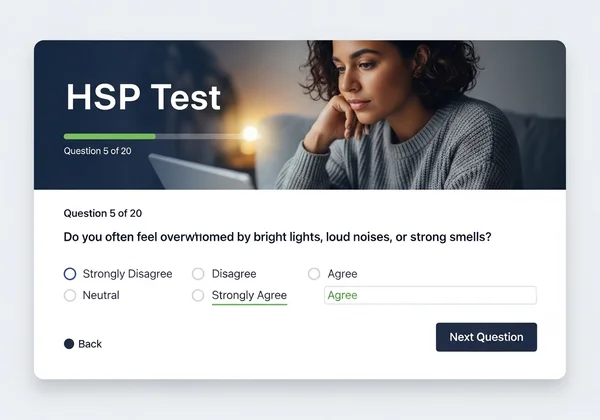
Take the science-backed, Official HSP Test at Hsptest.org today to gain valuable insights. This is the perfect starting point for self-discovery and fostering deeper, more meaningful connections.
Frequently Asked Questions About Highly Sensitive People
What are the main characteristics of a highly sensitive person?
Dr. Elaine Aron uses the acronym D.O.E.S. to describe the four core characteristics. D stands for Depth of processing (thinking things through deeply). O is for Overstimulation (being easily overwhelmed by stimuli). E represents Emotional responsiveness and empathy. S is for Sensitivity to subtleties in the environment.
Is being a Highly Sensitive Person a weakness or a strength?
It is neither; it is a neutral trait with both challenges and significant strengths. While challenges include a vulnerability to overstimulation and emotional exhaustion, the strengths are immense. HSPs are often highly empathetic, creative, intuitive, conscientious, and detail-oriented. The key is to manage the challenges to leverage the strengths. You can learn more by taking a free hsp quiz.
How can I confirm if I or someone I know is an HSP?
While reading about the trait is helpful, the most direct way to gain clarity is through a self-assessment designed for this purpose. The test developed by Dr. Elaine N. Aron is the gold standard. You can take the official HSP test on our website; it’s a reliable, free tool to help you confirm the trait.
Is HSP the same as being introverted or shy?
No, this is a common misconception. While approximately 70% of HSPs are introverts, 30% are extroverts who enjoy socializing but still get overstimulated and need downtime. Shyness is a fear of social judgment, whereas high sensitivity is a biological trait related to how the nervous system processes stimuli. An HSP may or may not be shy.