HSP Traits & DOES Model: Your Test Results Explained
Have you ever felt that you experience the world more intensely than others? Perhaps you notice subtle details people miss, feel deeply moved by art, or find yourself needing quiet time to recover from a busy day. If this sounds familiar, you might be a Highly Sensitive Person (HSP). Understanding this trait is the first step toward embracing your unique strengths.
This guide will demystify the core characteristics of high sensitivity using the renowned DOES model developed by Dr. Elaine N. Aron, the pioneering researcher in this field. We'll break down what each letter means, helping you make sense of your own experiences and interpret your HSP test results.
Understanding your sensitivity isn't about finding a label; it's about gaining a user manual for yourself. If you're ready to explore your own traits, you can start your journey with a comprehensive and insightful test designed to help you discover your unique profile.
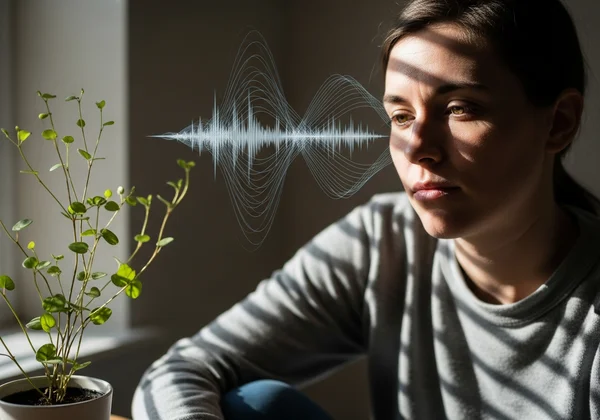
Understanding High Sensitivity: Beyond Just Being "Sensitive"
The term "sensitive" is often misunderstood. High sensitivity is not a weakness or a choice; it's a fundamental aspect of one's personality, rooted in biology. Let's clarify what it truly means.
What Exactly is a Highly Sensitive Person?
A Highly Sensitive Person (HSP) is someone with an innate personality trait characterized by a more attentive and responsive nervous system. It's not a disorder or a flaw. Dr. Elaine N. Aron's research suggests that about 15-20% of the population has this trait, meaning you are far from alone.
Being an HSP means you process info deeply. Think sights, sounds, emotions, thoughts. This brings creativity and empathy. But it can overwhelm you in busy settings.
The Science Behind Sensitivity: Sensory Processing Sensitivity (SPS) Explained
The scientific term for the HSP trait is Sensory Processing Sensitivity (SPS). This term better describes the underlying biological mechanism. SPS is not about having better senses, like sharper hearing or eyesight. Instead, it's about what your brain does with the sensory information it receives.
High SPS means your brain processes info thoroughly. You pause to reflect. You spot environmental subtleties. This depth powers every HSP trait.
Deconstructing Your HSP Test Results with Aron's DOES Model
To make the concept of high sensitivity easier to understand, Dr. Aron created the acronym DOES. This model outlines the four core pillars of the trait. If you identify strongly with all four, you are likely an HSP. Understanding this framework is key to interpreting your score from an HSP personality test.
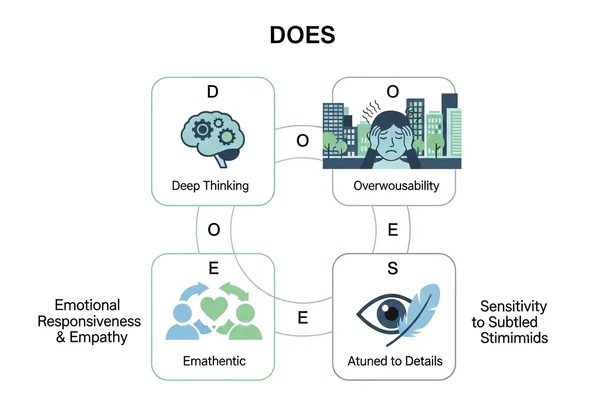
D: Depth of Processing – The Thinker's Trait
The "D" in DOES stands for Depth of Processing. This is the cornerstone of the HSP trait. You process information deeply, connecting it to past experiences and considering all possible outcomes. This isn't just overthinking; it's a comprehensive and often unconscious way of engaging with the world.
Signs of deep processing include:
- Taking longer to make decisions because you weigh every pro and con.
- Having a rich and complex inner life, filled with vivid thoughts and ideas.
- Being highly conscientious and detail-oriented in your work or hobbies.
- Often being told you're "wise for your age" or a "deep thinker."
Your test results may reflect this trait through questions about how you make choices or reflect on your day. A high score in this area indicates a mind that is constantly analyzing and synthesizing information.
O: Overarousability – Navigating a Stimulating World
The "O" stands for Overarousability, or being easily overstimulated. Because you process everything so deeply, you naturally reach a point of sensory overload faster than others. A busy shopping mall, a loud concert, or even a hectic workday can feel exhausting.
Signs of overarousability include:
- Feeling frazzled or drained after exposure to loud noises or bright lights.
- Needing to withdraw to a quiet, dark room to decompress.
- Becoming easily startled by sudden sounds or unexpected events.
- Struggling to perform well when being observed or under pressure.
This is not a sign of weakness. It's a logical consequence of a finely tuned nervous system. Recognizing your limits and scheduling downtime is crucial for managing this aspect of the HSP trait.
E: Emotional Responsiveness & Empathy – A Rich Inner World
The "E" represents both Emotional Responsiveness and Empathy. HSPs feel emotions—both positive and negative—more intensely. You may be deeply moved by a beautiful piece of music, a sad story, or an act of kindness. This emotional depth is often paired with strong empathy.
Signs of high emotional responsiveness and empathy include:
- Feeling others' emotions as if they were your own.
- Being deeply affected by violence or cruelty in movies or the news.
- Crying easily, whether from happiness, sadness, or beauty.
- Forming deep, meaningful connections with others.
This emotional richness is a superpower. It allows HSPs to be compassionate friends, caring partners, and intuitive leaders. An official HSP test will often include questions about your emotional reactions to various situations.
S: Sensitivity to Subtle Stimuli – Noticing the Unseen
Finally, the "S" stands for Sensitivity to Subtle Stimuli. This is your ability to notice the little things that others often overlook. You might detect a faint aroma, notice a slight change in someone's tone of voice, or feel uncomfortable in a scratchy sweater.
Signs of sensitivity to subtleties include:
- Being highly aware of your physical surroundings (e.g., lighting, furniture arrangement).
- Having a low pain threshold or being sensitive to medication.
- Noticing non-verbal cues and reading people's moods accurately.
- Appreciating fine flavors, smells, art, or music.
This awareness makes you intuitive and insightful. You're often the first to notice when something is "off" or when a friend needs support, even if they haven't said anything.
Connecting Your Test to Real Life: What Your HSP Score Means
Understanding the DOES model is powerful, but how does it relate to your personal test results? The goal is not just to get a score but to gain self-awareness that you can apply to your daily life.
Interpreting Your Unique Sensitivity Profile
Sensitivity isn't all-or-nothing. Parts of DOES may hit home more. Say you're big on empathy (E) and subtleties (S). But overstimulation (O)? You handle it okay.

Use your results as a guide for self-reflection. Ask yourself:
- Which parts of the DOES model best describe my daily experiences?
- In what situations do my HSP traits feel like a strength?
- When do they present a challenge?
If you haven't taken the test yet, this is a great time to get your results and see how your personal experiences align with this framework.
Embracing Your HSP Traits: Strengths and Challenges
Being highly sensitive comes with a unique set of strengths and challenges. Embracing your trait means learning to maximize the former and manage the latter.
Strengths to Cultivate:
- Empathy: Your ability to understand and connect with others is a gift.
- Creativity: Your rich inner world is a source of inspiration and innovation.
- Conscientiousness: Your deep processing makes you a reliable and thoughtful team member.
- Intuition: Your sensitivity to subtleties gives you powerful insights.
Challenges to Manage:
- Overwhelm: Learn to recognize your triggers and set boundaries to protect your energy.
- Emotional Exhaustion: Practice self-compassion and find healthy outlets for your feelings.
- Misunderstanding: Help others understand that your sensitivity is a part of who you are, not a flaw to be fixed.
Empowering Your Highly Sensitive Self

Think of the DOES model as your personal roadmap – a science-backed way to navigate your inner world with kindness. High sensitivity is not something to overcome; it's a valuable trait that, when understood and nurtured, can enrich your life and the lives of those around you.
By recognizing your Depth of processing, managing Overarousability, embracing your Emotional responsiveness, and appreciating your Sensitivity to subtleties, you can move from surviving to thriving.
Ready to understand your own unique sensitivity profile? Take the official HSP test today and start your journey toward self-acceptance and empowerment.
Frequently Asked Questions About HSP Traits & Testing
What is the purpose of an HSP test?
The main purpose of an HSP test is self-discovery and validation. It is not a clinical diagnostic tool for any disorder. Instead, it provides a structured way to see if your personal experiences align with the scientifically established characteristics of Sensory Processing Sensitivity, helping you better understand yourself.
What are the common characteristics of a highly sensitive person?
The most common characteristics are captured by the DOES model: Depth of processing (thinking deeply), Overarousability (getting easily overwhelmed), Emotional responsiveness and empathy (feeling strongly), and Sensitivity to subtle stimuli (noticing details). A person is likely an HSP if they exhibit all four of these traits.
Is high sensitivity the same as being an introvert?
No, they are different traits, although they can overlap. Introversion is about where you get your energy (from being alone), while high sensitivity is about how your nervous system processes information. Research shows that about 70% of HSPs are introverts, but that means a significant 30% are extroverts who enjoy social engagement but may still become overstimulated by it.
How can understanding the DOES model help me in daily life?
Understanding the DOES model helps you identify your needs and strengths. It can empower you to set better boundaries to avoid overstimulation (O), appreciate your deep thinking and intuition (D, S), and see your emotional depth as a gift rather than a burden (E). It provides a practical language for explaining your needs to others.
Where can I take a reliable HSP test based on Dr. Aron's research?
For a comprehensive assessment that reflects the core principles of Dr. Elaine N. Aron's work, our platform offers a reliable HSP test. It is designed to help you explore your traits and provides options for a deeper, personalized analysis to guide you on your journey of self-discovery.