HSP vs. Neurodivergence: Key Differences Explained Simply
So you've just taken the HSP Test, and while the results resonate, a new question pops up: "Is this just high sensitivity, or could it be something more?" If you're feeling a mix of clarity and confusion, you're in the right place. Many people who discover they're a Highly Sensitive Person (HSP) also see overlaps with neurodivergent traits like autism or ADHD. Untangling them is the key to truly understanding your unique wiring. Explore your sensitivity profile and let's get you the clarity you deserve.
Understanding HSP Through the DOES Model
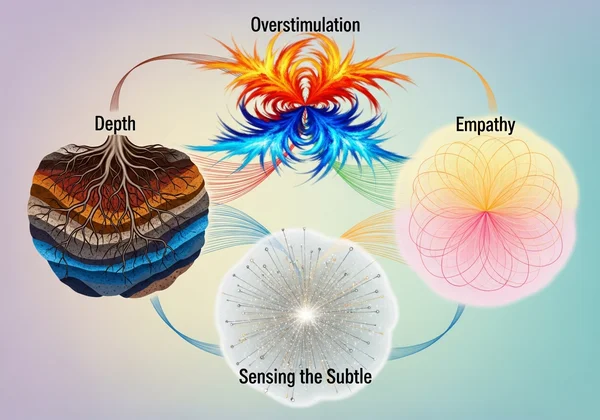
Before we dive into comparisons, let's clarify what it means to be a Highly Sensitive Person (HSP). Psychologist Dr. Elaine Aron's research identifies four core characteristics, easily remembered by the acronym DOES:
- Depth of Processing: You think deeply about things and process information thoroughly before acting.
- Overstimulation: You get overwhelmed more easily by busy environments or demanding situations.
- Emotional Responsiveness & Empathy: You experience both positive and negative emotions more intensely and have a high level of empathy.
- Sensing the Subtle: You notice small details that others might miss, from subtle shifts in someone's tone to faint sounds or smells.
These traits exist on a spectrum, and roughly 20% of the population is considered highly sensitive. Take the official HSP Test to see where you fall on this sensitivity spectrum.
Neurodivergence Explained: More Than Just a Label
Neurodivergence is an umbrella term for brains that function, learn, and process information differently from what is considered "neurotypical." It includes conditions such as:
- Autism Spectrum (ASD)
- Attention-Deficit/Hyperactivity Disorder (ADHD)
- Dyslexia
- Tourette Syndrome
While many neurodivergent people are also highly sensitive, these conditions represent fundamental differences in brain structure and function, whereas being an HSP is considered a healthy, innate personality trait.
HSP vs. Autism: Sensory Differences Decoded
How Sensory Processing Diverges
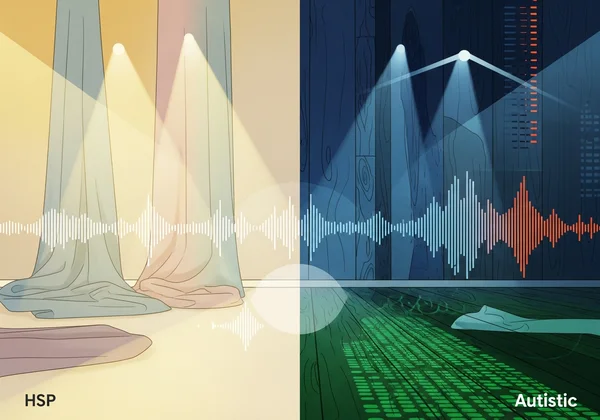
This is a major area of overlap and confusion. Both HSPs and autistic individuals can experience intense reactions to sensory input, but the underlying mechanism often differs.
| Characteristic | HSP | Autism |
|---|---|---|
| Sensory Overload | Tends to be a gradual accumulation from overstimulation. | Can be a sudden and overwhelming "shutdown" or "meltdown." |
| Sound Sensitivity | Dislikes loud, chaotic noises (like a loud bar). | May hear things others can't (like electricity buzzing) or have aversions to specific frequencies. |
| Texture Reactions | Prefers soft fabrics and may dislike scratchy tags. | May have an extreme, sometimes physical, reaction to certain food textures or fabrics. |
| Pattern Recognition | Excels at noticing subtle social and emotional cues. | Often excels at recognizing logical, systemic, or visual patterns. |
The key difference? HSPs tend to process sensory input very deeply, while autistic individuals may experience qualitatively different sensory processing. Our HSP Test can help you identify if your experiences align with the HSP pattern of deep processing.
Navigating Social Needs
Here's where the paths often diverge more clearly:
- HSPs: Crave deep, meaningful connections but get exhausted by too much social interaction. Think of it as a "social hangover" after a great party—the connection was worth it, but you need quiet time to recover.
- Autistic Individuals: Often prefer structured, predictable social interactions and may find small talk inherently draining, regardless of the emotional connection.
Untangling HSP and ADHD: Focus and Energy
The Attention Paradox
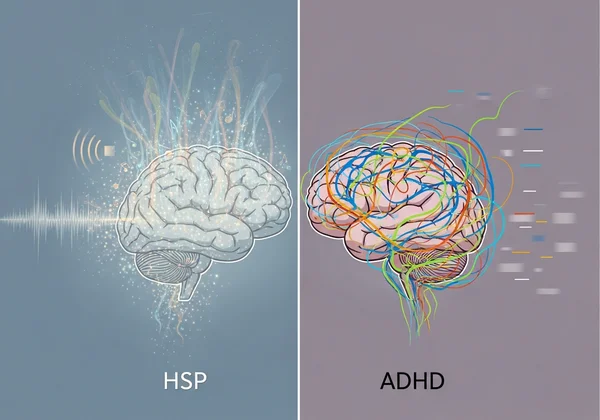
Both HSPs and people with ADHD can be easily distracted, but the source of the distraction is different.
- HSP Distraction: Caused by external overstimulation. The brain is taking in too much information from the environment (lights, sounds, other people's emotions) and gets overwhelmed.
- ADHD Distraction: Stems from internal challenges with executive function and focus regulation. The brain actively seeks stimulation.
Ask Yourself This: If you're in a perfectly quiet, calm room, can you focus? If yes, your distraction is likely linked to HSP overstimulation. If your mind still races and seeks new input, it might be worth exploring ADHD.
Emotional Regulation Pathways
While both can lead to intense emotional experiences, their origins are distinct:
- HSP Emotionality: Rooted in deep processing and high empathy. Emotions are felt with great intensity and nuance.
- ADHD Emotionality: Often linked to challenges with emotional regulation and impulsivity, known as Rejection Sensitive Dysphoria (RSD).
The free HSP assessment can clarify whether your emotional landscape aligns with the core traits of high sensitivity.
Can You Be Both HSP and Neurodivergent?
Yes, absolutely. They are not mutually exclusive. Many autistic people or those with ADHD also identify as HSPs. This combination can create a unique experience:
- Amplified Strengths: Incredible creativity, deep empathy, and a unique perspective.
- Heightened Challenges: Sensory and emotional overwhelm can be more intense, requiring more diligent self-care.
Understanding this overlap is empowering. Start by establishing your sensitivity baseline with our research-backed HSP Test.
Navigating Next Steps After Your HSP Test
Your test results offer valuable insights, but they aren't a diagnosis of any condition. Here’s a simple path forward:
- Explore Your HSP Score: Understand which aspects of sensitivity are most prominent for you.
- Observe Your Patterns: Notice when and where your traits feel like a superpower versus a challenge.
- Consider Further Evaluation: If you strongly suspect autism or ADHD is impacting your life, consider speaking with a qualified professional.
- Get Your Custom Report: For personalized strategies, access our detailed analysis after the test.
Think of your results as a starting point. From here, you can build strategies that truly work for you. In fact, 82% of users report life-changing insights after completing our comprehensive assessment.
Common Questions: Untangling HSP and Neurodivergence
Is HSP considered neurodivergent?
That's a great question. Officially, HSP isn't classified as a form of neurodivergence. It's considered a normal, healthy personality trait—a specific variation in how the nervous system processes information, not a fundamental difference in brain structure.
Can the HSP Test identify autism or ADHD?
No, our test is not a diagnostic tool for autism or ADHD. Its purpose is to specifically measure traits of high sensitivity based on Dr. Elaine Aron's research. However, your results can provide crucial clarity, helping you see if your experiences align more with HSP patterns before you decide to seek a formal evaluation for other conditions.
What if I relate to all the descriptions?
It's very common to see yourself in multiple descriptions, as these traits can overlap. The best first step is to establish a baseline. Take the official HSP Test to see how strongly you score for sensitivity. From there, if you still have questions, you'll have specific insights to share with a professional.
Does high sensitivity make autism more challenging?
It can create a more intense experience, but it isn't necessarily more "challenging." Many autistic HSPs find their high sensitivity gives them a powerful ability to appreciate beauty, art, and deep emotional connections. Like any trait, self-knowledge is the key to harnessing the strengths and managing the challenges.
Clarity is the First Step to Empowerment
Knowing whether you're an HSP, neurodivergent, or both isn't about finding a label—it's about getting the right user manual for your brain. This clarity empowers you to:
- Build effective self-care routines that prevent burnout.
- Communicate your needs clearly to friends, family, and colleagues.
- Reframe your sensitivities as strengths.
- Seek the right kind of support for your unique wiring.
Over 500,000 people have used our assessment to start this journey. Are you ready to understand yourself better?
Start Your Free HSP Test Now →
Discover your unique sensitivity profile in under 10 minutes. Your path to self-understanding is just a click away.