Sensory Sensitivity Examples: What Everyday Reactions Can Mean
Sensory sensitivity examples are easiest to understand when they are grounded in ordinary life: a shirt tag that feels impossible to ignore, a grocery store that becomes mentally exhausting, or a smell that makes it hard to focus. These reactions can happen in children, teens, and adults, and they can show up in people who are highly sensitive, autistic, ADHD, anxious, tired, or simply under too much input at once. If you are exploring whether your reactions fit a broader sensitivity pattern, a structured HSP self-reflection can be a gentle place to start. It is not a clinical assessment, but it can help you notice patterns with more language and less self-blame.

What Sensory Sensitivity Means in Everyday Language
Sensory sensitivity means your nervous system notices and responds strongly to input from the senses. Most people think of the five familiar senses: sight, sound, smell, taste, and touch. Many sensory processing discussions also include balance and movement, body position, and internal body cues such as hunger, temperature, or pain.
The key idea is not that one person is "too dramatic" and another is "normal." People have different sensory thresholds. A lower threshold can make a small amount of input feel intense. A higher threshold can make someone seek stronger input before they feel regulated or alert. The same person may be sensitive in one system and under-responsive in another.
For highly sensitive people, sensory input often connects with depth of processing. A bright room is not only bright; it may also come with visual clutter, social pressure, emotional tone, and the effort of filtering everything at once. That layered processing can be a strength in quiet, thoughtful settings and a challenge in busy ones.
Common Sensory Issues Examples by Sense
The examples below are not a checklist for labeling yourself or someone else. They are a way to translate vague discomfort into observable patterns.
Sound sensitivity
Sound sensitivity may look like discomfort with alarms, motorcycles, hand dryers, overlapping conversations, chewing sounds, or sudden laughter in a small room. A child might cover their ears at a birthday party. An adult might feel unusually drained after working in an open office.
Some people are not bothered by loudness alone; unpredictability matters. A steady fan may be fine, while a phone notification makes the whole body tense. Background noise can also make speech harder to process, so a person may seem distracted when their brain is working hard to sort sound from noise.
Touch and clothing sensitivity
Touch sensitivity can show up through strong reactions to scratchy labels, seams, tight waistbands, wool, sticky hands, light touch, hair brushing, or certain bedding. A child who refuses a shirt may be communicating discomfort rather than defiance. An adult may quietly build a wardrobe around soft fabrics, familiar shoes, and predictable layers.
Touch can also go the other direction. Some people seek firm pressure, weighted blankets, tight hugs from trusted people, or heavy work such as carrying groceries because deep pressure feels organizing.
Visual sensitivity
Visual overload can come from fluorescent lights, bright screens, flashing displays, busy shelves, cluttered rooms, fast-moving crowds, or high-contrast patterns. In daily life, this might look like headaches in big stores, irritability under office lights, or a strong need to dim screens.
For autistic people, visual sensitivity is often discussed alongside sensory overload, but it is not limited to autism. Highly sensitive adults may also notice visual details intensely and need more recovery time after visually busy environments.
Smell and taste sensitivity
Smell and taste sensitivity may involve perfume, cleaning products, candles, food smells, toothpaste, food textures, spice levels, or mixed smells in cafeterias. Some people gag at certain textures. Others avoid restaurants because smell and sound combine into one overwhelming experience.
Food selectivity can have many causes, including preference, culture, appetite, anxiety, medical concerns, and sensory response. When sensory input is part of the picture, forcing exposure without support often makes the association worse.
Movement, balance, and body awareness
Vestibular sensitivity involves movement and balance. One person may avoid swings, escalators, heights, or car rides. Another may crave spinning, bouncing, fast movement, or rocking. Proprioception, or body awareness, can affect how much force someone uses, whether they bump into objects, or how grounded they feel in space.
Interoception, the sense of internal body cues, can affect noticing hunger, thirst, bathroom needs, temperature, or pain. Someone may seem "fine" until they suddenly crash because their body signals were hard to read earlier.
Sensory Sensitivity in Adults
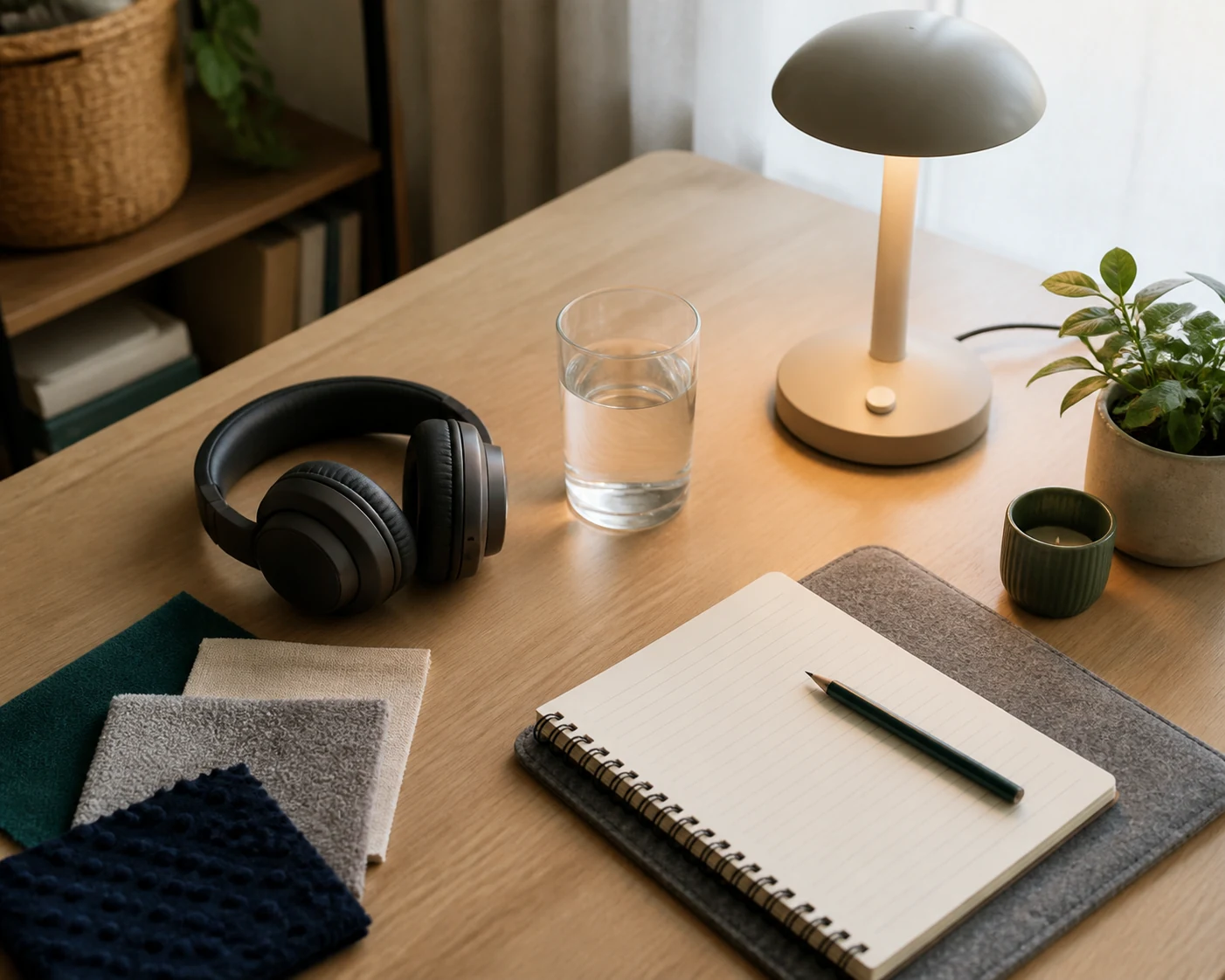
Sensory sensitivity in adults is often hidden because adults learn to adapt. They choose quiet restaurants, avoid certain fabrics, work from the same seat, carry headphones, shop at less busy times, or decompress alone after social events. From the outside, these choices may look like preference. From the inside, they may be energy management.
Adult examples often appear in work and relationships. A person may struggle to concentrate when multiple people talk nearby, feel tense after commuting, or become short-tempered after a day of fluorescent lighting. They may love deep conversations but find loud group settings exhausting. They may also need more transition time between tasks because sensory input keeps echoing after the situation ends.
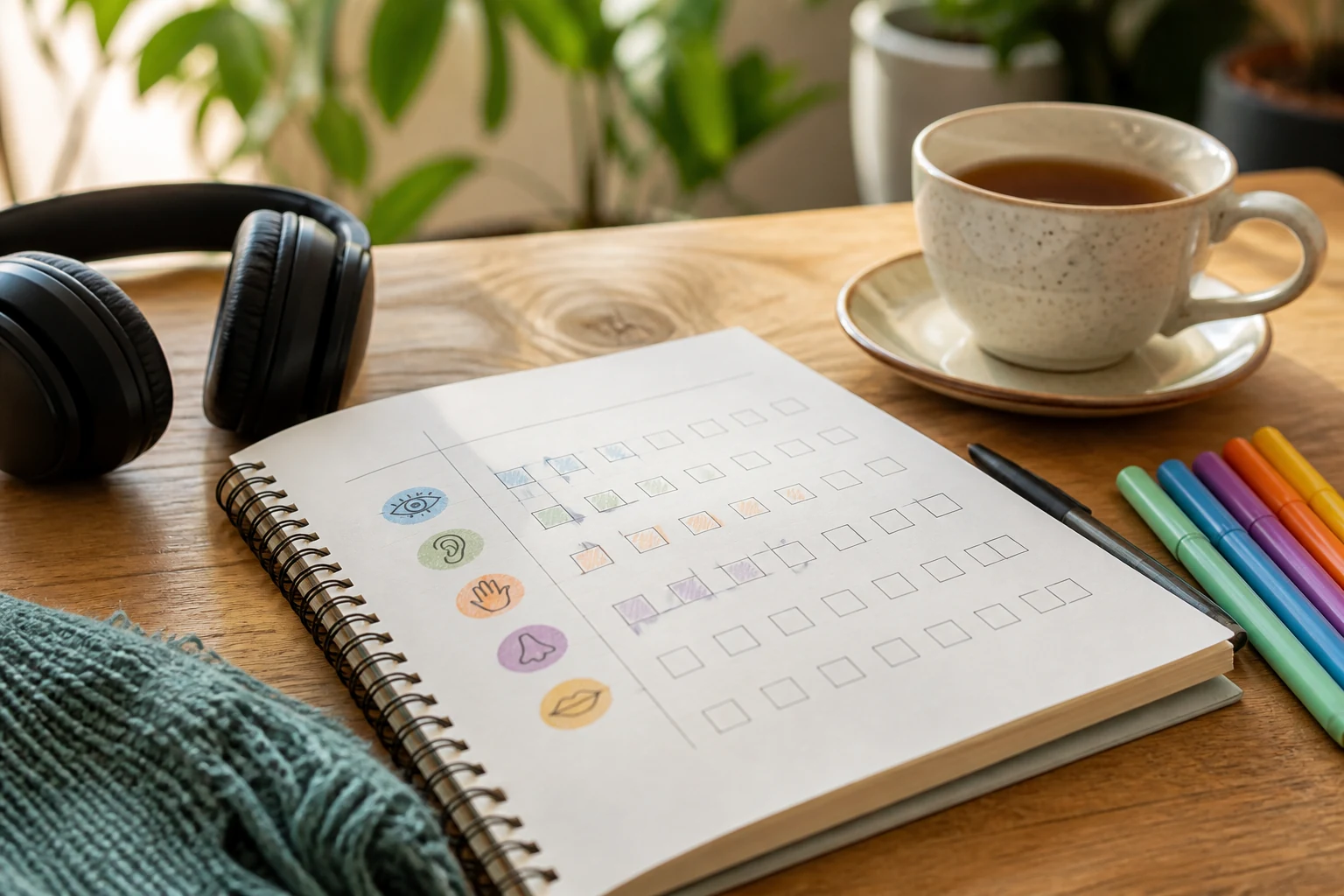
If you recognize this pattern, it can help to track the setting, the input, your body response, and what helped. The goal is not to avoid all stimulation. It is to understand which inputs are costly and which supports make daily life more workable. For readers who connect sensory sensitivity with high sensitivity, an educational high sensitivity self-assessment can offer another lens for reflection.
Sensory Sensitivity, Autism, ADHD, HSP, and SPD
Searches for sensory sensitivity autism, ADHD sensory issues, high functioning autism sensory issues, and sensory processing disorder often overlap because sensory patterns can appear across many experiences. Autism commonly includes sensory differences, including both hypersensitivity and hyposensitivity. ADHD can involve sensory seeking, distractibility from input, or difficulty filtering background stimulation. HSP, or high sensitivity, describes a temperament trait linked with deep processing and heightened awareness of subtle stimuli.
Sensory processing disorder, sometimes shortened to SPD, is commonly used to describe significant sensory processing challenges. Some clinicians and occupational therapists use sensory processing frameworks to guide support, especially when daily functioning is affected. At the same time, terminology and recognition can vary by setting, so it is wise to keep language careful.
The practical question is often less "Which label fits perfectly?" and more "What pattern is happening, how much does it interfere, and what support is appropriate?" For example, a person who avoids loud cafeterias, gags at food textures, and melts down after bright stores may need environmental adjustments, sensory tools, or an occupational therapy evaluation. Another person who notices subtle sounds and needs quiet recovery time may mainly need lifestyle design and self-understanding.
When Sensory Overload Happens
Sensory overload happens when input exceeds a person's ability to process and respond comfortably. It can arrive suddenly, such as after a fire alarm, or build slowly through lights, noise, social demands, hunger, and time pressure.
Common signs include covering ears or eyes, shutting down, snapping at small requests, needing to leave, becoming unusually quiet, crying, pacing, faster speech, or difficulty making decisions. Children may scream, run away, refuse clothes, or drop to the floor. Adults may mask the reaction in public and then collapse into exhaustion at home.
One helpful reframe is to treat overload as information. Instead of asking, "Why am I like this?" ask, "What inputs were stacking up?" A simple overload map can include four columns:
| Moment | Sensory input | Body signal | Helpful support |
|---|---|---|---|
| Grocery store after work | Bright aisles, carts, music | Tight jaw, rushing thoughts | Short list, headphones, quieter hour |
| School morning | Clothing seams, time pressure | Tears, refusal | Soft outfit choices, earlier transition |
| Team meeting | Overlapping voices | Mental fatigue | Agenda, notes, seat away from door |
This kind of mapping turns a confusing reaction into a pattern you can adjust.
How to Help a Child With Sensory Sensitivity
A child with sensory sensitivity needs adults to look beneath the behavior. Refusal, tears, or running away may be the child's attempt to escape input or seek regulating input. That does not mean every boundary disappears. It means support works better when the sensory need is part of the plan.
Start with observation. What happens before the reaction? Is the room loud, bright, crowded, smelly, scratchy, rushed, or unpredictable? Does the child improve when the sound drops, the clothing changes, or movement is offered?
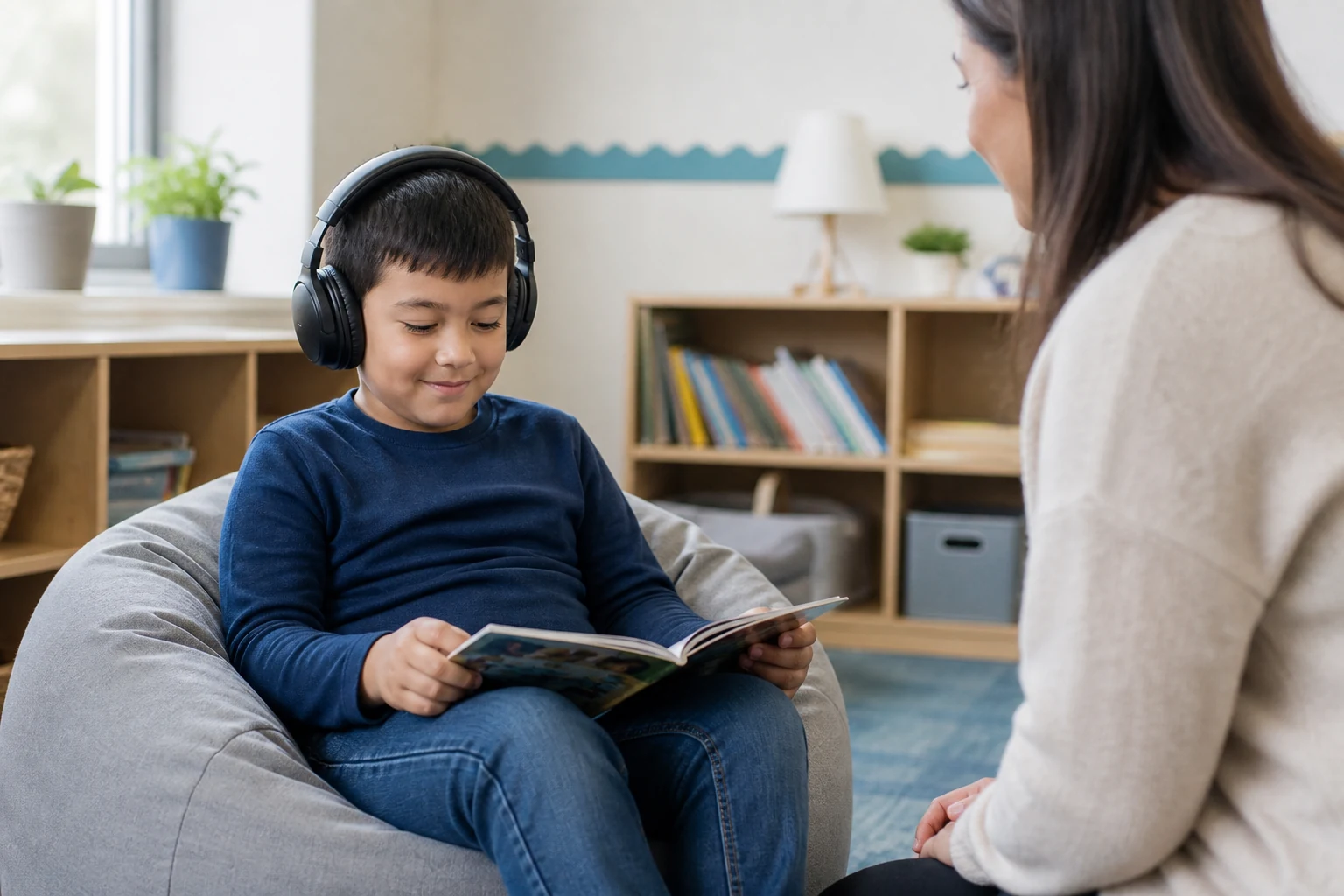
Next, offer choices that preserve dignity. Try two soft shirts instead of one required shirt. Offer headphones before a noisy event. Build movement into the day before a seated task. Use visual schedules for unfamiliar routines. Pack a small calm kit with sunglasses, a soft item, water, and a simple fidget if those tools help the child stay regulated.
For school or daily care, share concrete observations rather than broad labels. "Loud lunchrooms lead to tears and refusal to eat" is more useful than "she is difficult at lunch." If sensory reactions interfere with eating, sleeping, hygiene, learning, safety, or family life, a pediatrician or occupational therapist can help identify appropriate support.
Practical Ways to Support Sensory Needs
Support does not have to be dramatic. Small adjustments often reduce the amount of input a nervous system has to process.
Try these low-pressure strategies:
- Reduce one input at a time, such as lowering light before changing the whole routine.
- Add predictable recovery time after busy places.
- Use soft clothing, tagless options, or familiar textures when comfort matters.
- Carry headphones, earplugs, sunglasses, or a brimmed hat for high-input environments.
- Create a transition ritual between work, school, errands, and home.
- Use deep pressure or heavy work only when it feels safe and welcome.
- Track patterns for two weeks before drawing big conclusions.
It also helps to separate avoidance from accommodation. Avoiding every challenge can make life smaller, but forcing constant exposure can build stress. A balanced approach asks, "What support lets this person participate with less strain?"
Using Sensory Sensitivity Examples for Gentle Self-Reflection
Sensory sensitivity examples are most useful when they help you become more specific and more compassionate. Instead of saying, "I cannot handle anything," you might learn, "Crowded sound plus bright light after a long workday is too much unless I plan recovery." Instead of saying, "My child is being stubborn," you might notice, "The sock seam and morning rush are creating a predictable stress point."
For HSP readers, sensory sensitivity may be one part of a wider pattern that includes emotional depth, careful processing, and strong awareness of subtleties. You can explore that pattern through a gentle HSP reflection tool, then use your observations to make everyday choices with more kindness. If sensory reactions are intense, unsafe, painful, or limiting important parts of life, consider bringing your notes to a qualified professional for tailored guidance.

FAQ
What is sensory sensitivity disorder?
People often use "sensory sensitivity disorder" to mean strong sensory reactions that affect daily life. More formal terms may include sensory processing disorder, sensory modulation differences, or sensory processing challenges, depending on the professional and context. Because terminology varies, it is better to describe the specific pattern: which input is hard, what reaction happens, and how much it affects daily functioning.
Can you have sensory sensitivity without autism?
Yes. Sensory sensitivity can appear in autistic people, ADHDers, highly sensitive people, people with anxiety or migraine, children in development, and people under stress, fatigue, or burnout. Autism is one important context for sensory differences, but it is not the only one.
What causes sensory overload?
Sensory overload is usually caused by too much input, too little recovery, or too many demands at once. Noise, light, smell, touch, movement, hunger, social pressure, and time pressure can stack together. The same environment may feel manageable one day and overwhelming another day if sleep, stress, or health changes.
Are sensory issues examples the same as symptoms?
They can overlap, but examples are not proof of a condition. A person might dislike scratchy clothing for many reasons. A stronger signal appears when reactions are repeated, intense, hard to recover from, or interfere with daily life. Notes about patterns are more useful than isolated examples.
How can adults manage sensory sensitivity at work?
Adults can try practical adjustments such as choosing a quieter seat, using noise-reducing headphones when appropriate, dimming screens, blocking focus time, taking short recovery breaks, or preparing for high-input meetings. If sensory strain affects work performance or wellbeing, documentation from a qualified professional may help with formal accommodations.
When should a family seek professional support?
Consider support when sensory reactions affect eating, sleep, hygiene, school, work, relationships, safety, or emotional wellbeing. A pediatrician, mental health professional, or occupational therapist can help sort through possible contributors and suggest individualized strategies.